Understanding the Digital, Electronic, Online or Non-Traditional Consumer Lending Regulations, 2025 and the Implications for CREDICORP
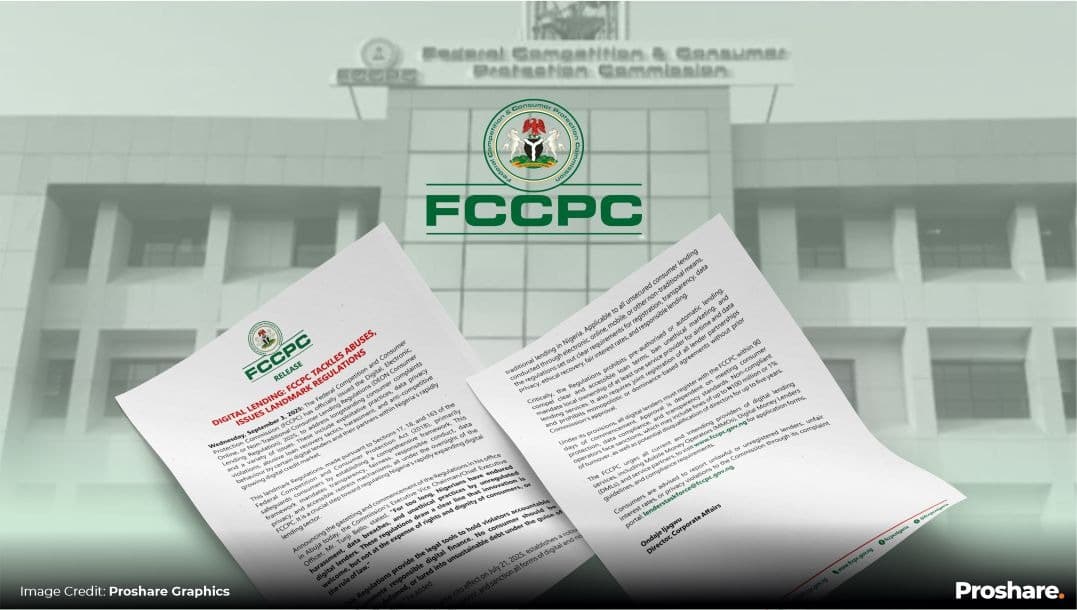
Digital Lending: FCCPC Tackles Abuses, Issues Landmark Regulations
A comprehensive framework for consumer protection in Nigeria's digital lending ecosystem
Executive Summary
The Federal Competition and Consumer Protection Commission (FCCPC) recently issued the Digital, Electronic, Online, or Non-Traditional Consumer Lending Regulations, 2025 (the “DEON Regulations”) pursuant to sections 17, 18, and 163 of the Federal Competition and Consumer Protection Act, 2018. These Regulations aim to protect consumers, ensure ethical lending practices, and promote fair competition in Nigeria's rapidly evolving digital lending ecosystem.
For the Nigerian Consumer Credit Corporation (CREDICORP), which was established to deepen access to consumer credit through partnerships with Participating Financial Institutions (PFIs), Fintechs, and digital platforms, this Regulation is a major policy milestone. It directly aligns with CREDICORP's mandate to promote responsible, transparent, and sustainable credit delivery in Nigeria.
Alignment with CREDICORP's Mandate
The DEON Regulations strengthen the consumer-protection framework in digital lending, which is an area CREDICORP already prioritizes. Provisions under Part 4 (Regulations 17–22) mandate transparency in loan terms, fair treatment of consumers, data privacy compliance, and effective complaint resolution mechanisms.
These provisions directly complement CREDICORP's Know Your Rights Guide (KYRG), which outlines borrowers' rights to fair treatment, informed consent, and redress.
By embedding these standards in law, the FCCPC Regulations reinforce the safeguards CREDICORP has been institutionalizing through its lending partnerships and credit education programs.
Regulatory Synergy and Institutional Collaboration
Complementary Oversight
CREDICORP operates within a multi-regulator ecosystem alongside the Central Bank of Nigeria (CBN), NDIC, and FCCPC. The DEON Regulations explicitly acknowledge the continuing roles of sector regulators while granting the FCCPC oversight of consumer-lending conduct, competition, and fair-market practices.
Inter-Agency Data Integration
Under Regulation 25, lenders must furnish service data to recognized credit bureaus in accordance with the Nigeria Data Protection Act, 2023. This requirement dovetails with CREDICORP's mission and mandate to accelerate access to consumer credit.
Implications for CREDICORP's Lending Partners
Registration and Approval Requirements
Regulations 7 provides that every digital lender, service provider, or ancillary partner must register with and obtain FCCPC approval within 90 days of commencement.
CREDICORP's PFIs will therefore be required to:
- Obtain FCCPC registration and approval for their digital-lending products and platforms.
- Execute a Consumer Lending Services Agreement (CLSA) approved by the Commission.
Data Privacy and ESG Compliance
The Regulations' emphasis on data privacy and responsible business conduct aligns with CREDICORP's ongoing work to incorporate Environmental, Social, and Governance (ESG) principles as well as international best practices, especially in data ethics, borrower protection, and financial inclusion for women and youth.
Strengthening Competition and Local Participation
Regulation 24 mandates that all regulated undertakings offering airtime or data-lending services must partner with at least two intermediaries and/or service providers for service activation and one of whom shall be a fully owned local service provider.
Compliance, Reporting, and Governance
Under Part 6, lenders must submit biannual and annual reports to the FCCPC detailing transaction volumes, fees, consumer complaints, and resolutions. CREDICORP can leverage this reporting structure to enhance internal monitoring and build a unified Credit Performance Dashboard across its partner network.
Conclusion
The 2025 Digital Consumer Lending Regulations mark a pivotal evolution in Nigeria's financial-inclusion landscape. It further reinforces CREDICORP's KYRG initiative by embedding borrower rights in law, providing a strong basis for nationwide consumer-education campaigns.
For CREDICORP, alignment with these Regulations is not merely a compliance obligation but a strategic opportunity to lead Nigeria's transition toward a transparent, technology-driven, and consumer-centric credit system.